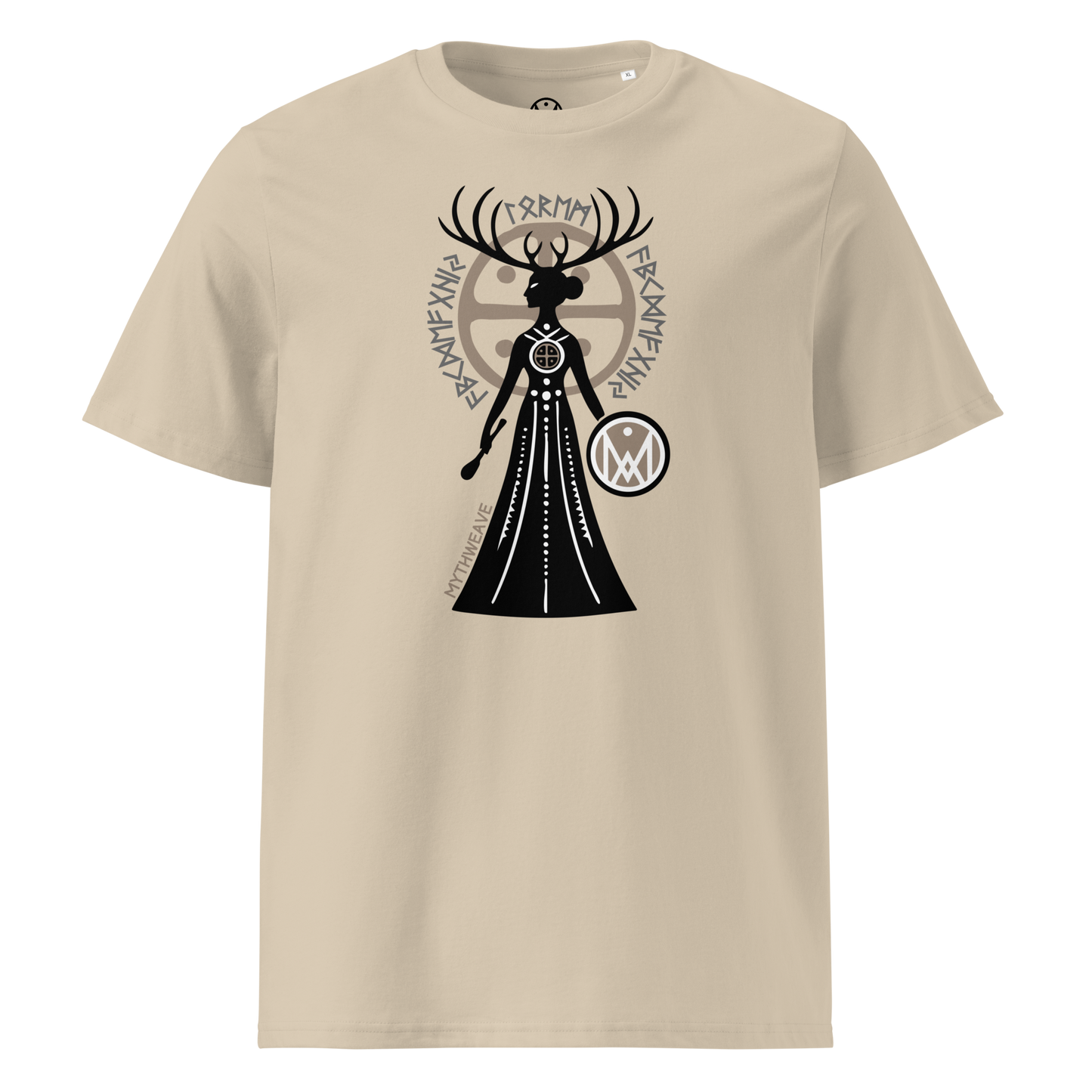
When you put on a t-shirt in the morning, have you ever thought about its story? Behind every sustainable garment lies a human, ecological, and poetic adventure that deserves to be told. Let's explore the life cycle of a garment , and more specifically, that of an ethically sourced organic cotton t-shirt , a symbol of responsible production .

1. The birth: the organic cotton seed
It all starts in the soil. That's where organic cotton takes root, grown without pesticides, without GMOs, and with responsible water use. Unlike conventional cotton, which depletes the soil and destroys biodiversity, organic cotton nourishes the earth and respects ecosystems.
Organic cotton seeds promise a cleaner textile future. They grow in fields where farmers practice crop rotation, promoting soil regeneration. The result: less pollution, more life, and a concrete first step towards a sustainable clothing lifecycle .
2. The harvest: hands that work with respect
When harvest time comes, the difference is striking. Organic cotton is often hand-picked, preserving the fiber and reducing the use of polluting machinery.
Behind every fiber, there are faces. Farming families, local communities, who benefit from fairer trade. Responsible production isn't just about nature: it also guarantees humane, fair, and dignified working conditions.

3. The transformation: from raw cotton to textile fiber
Raw cotton is then spun, woven, and transformed into fabric. In a conventional supply chain, this step is synonymous with harsh chemicals, toxic bleaching, and harmful dyes.
But in ethical organic cotton , the focus is on:
- natural or certified non-toxic dyes,
- reduced water consumption,
- gentler mechanical processes for the fiber.
This stage in the life cycle of a garment is crucial: it is here that we choose whether the future t-shirt will be a poison for the skin… or a respectful caress.
4. The garment making process: from the cut to the garment you wear
Once the fabric is ready, it is entrusted to sewing workshops. In ethical fashion , these workshops are committed to:
- a fair wage
- decent working hours,
- working conditions that respect the workers.
This is the moment when the material takes shape: an organic cotton t-shirt , a comfortable sweatshirt, or a baby bodysuit. Each garment becomes the result of a supportive human chain , where every participant counts.
5. Use: everyday life of the garment
The t-shirt finally arrives in your hands. This is the longest phase in a garment's life cycle : the phase where you wear it, wash it, and love it.
An organic t-shirt is more durable than fast fashion:
- It retains its colors longer.
- It retains its softness wash after wash.
- It ages better, and can be passed on or resold.
Every time you choose ethical organic cotton , you extend the life cycle and reduce textile waste.

6. The second life: recycling, repairing, passing on
And what happens when the garment wears out? Here again, the sustainable life cycle doesn't stop. An organic cotton t-shirt can:
- to be repaired (mending, customized, embroidered),
- to be passed on (donation, second-hand, thrift store),
- or be recycled into fibers to create new fabrics.
In a responsible production approach, nothing is lost: clothing becomes part of a virtuous circle, where the material circulates rather than ending up in a landfill.
7. Back to the land: the circle is complete
The strength of organic cotton lies in its biodegradability. Unlike synthetic fibers derived from petroleum (polyester, nylon), cotton decomposes naturally.
Thus, a sustainable garment returns to the earth without polluting, closing the loop of the cycle: from seed to garment, from earth to earth.
Every garment is a choice
Choosing an ethical organic cotton t-shirt means participating in a collective story where nature, producers, artisans and yourself are linked in a common responsibility.
The life cycle of a sustainable garment reminds us that behind every seam lies a choice: to perpetuate a destructive model, or to build a more respectful and beautiful future.