You've probably seen it everywhere: "100% cotton," "organic cotton," "natural cotton," "GOTS certified"... But behind these terms, there's often a lot of confusion . Is a "classic" cotton t-shirt really that bad? And what's so special about this so-called organic cotton ?
Don't panic. Here's a simple and accessible comparison between conventional cotton and organic cotton — to help you make informed choices, without getting lost in the fibers.
Their origin: the seed of a different world
Conventional cotton:
The majority of the world's cotton comes from genetically modified (GM) seeds . These seeds are often designed to resist insects or tolerate herbicides, which forces farmers to depend on agrochemical companies... year after year.
A logic of monoculture , industrial dependence and soil pollution , which weakens ecosystems and local communities .
Organic cotton:
Produced from natural, unmodified seeds , often local or selected according to the seasons.
- Zero GMOs.
- Respect for the cycles of nature.
- Preservation of biodiversity.
From the seed, organic cotton says “no” to the forced industrialization of life. It champions sustainable agriculture, ethical fashion, and a healthier future for the planet.
Choosing organic cotton means sowing a gentle, committed and conscious revolution.
Water: an unequal thirst
It's a very water-intensive crop . A single t-shirt can require up to 2,700 liters of water—that's what a person drinks in two years. Why? Because it's often grown in monoculture on arid land , with intensive irrigation. This method depletes water resources , weakens local ecosystems , and contributes to soil desertification .
Organic cotton: Grown in more suitable areas, with natural or very limited irrigation , and richer soils that retain water better thanks to crop rotation. Result: up to 91% water savings according to some studies.
The chemicals used (or not)
Conventional cotton:
- Pesticides
- insecticides
- chemical fertilizers
- aggressive launderers
- toxic dyes …
This crop alone uses more than 15% of the world's insecticides . Consequences:
– Soil and water pollution,
– Health problems for farmers,
– Harmful residues on clothing.
Organic cotton:
- Zero chemical pesticides
- No synthetic fertilizers
- No toxic dye
- Respect for the health of soils, water, and humans.
Organic cotton protects the planet, the farmers and your skin .
The human conditions behind textiles
Conventional cotton: In many countries, cotton cultivation is associated with:
- child labor,
- indecent wages,
- unreasonable working hours
- Dangerous exposure to chemicals without protection.
Certified organic cotton (such as GOTS):
- Respect for human rights,
- decent wages,
- freedom of association,
- No forced or child labor.
Buying certified organic cotton means protecting human dignity .
The softness, the durability, the feel
Conventional cotton: It may seem soft at first… but it is often chemically treated to appear so. With repeated washings: it wears out quickly, loses its shape, and becomes dull.
Organic cotton:
- More breathable,
- naturally gentler
- stronger because the fibers are better preserved,
- best for sensitive skin (eczema, allergies, babies…).
It's the cotton your body recognizes. The one that respects your skin as much as the earth.
Two worlds, two philosophies
|
Criteria |
Conventional cotton |
GOTS certified organic cotton |
|
Seeds |
GMOs |
Natural, unmodified |
|
Water |
Very high consumption |
Up to 90% savings |
|
Chemicals |
Fertilizers, pesticides, toxic dyes |
No harmful chemicals |
|
Workers' Health |
Often exposed, precarious |
Protected by social norms |
|
Environmental impact |
Pollution + destruction of biodiversity |
Respect for ecosystems |
|
Comfort & durability |
Artificial softness, wears out quickly |
Natural, lasting softness |
|
Cost |
Cheaper to buy |
Higher investment, but sustainable |
Buying conventional cotton means supporting a highly polluting, opaque, and often unfair industry. Choosing certified organic cotton is an act of love for: the planet, people, your body , and a gentler future we can build together.
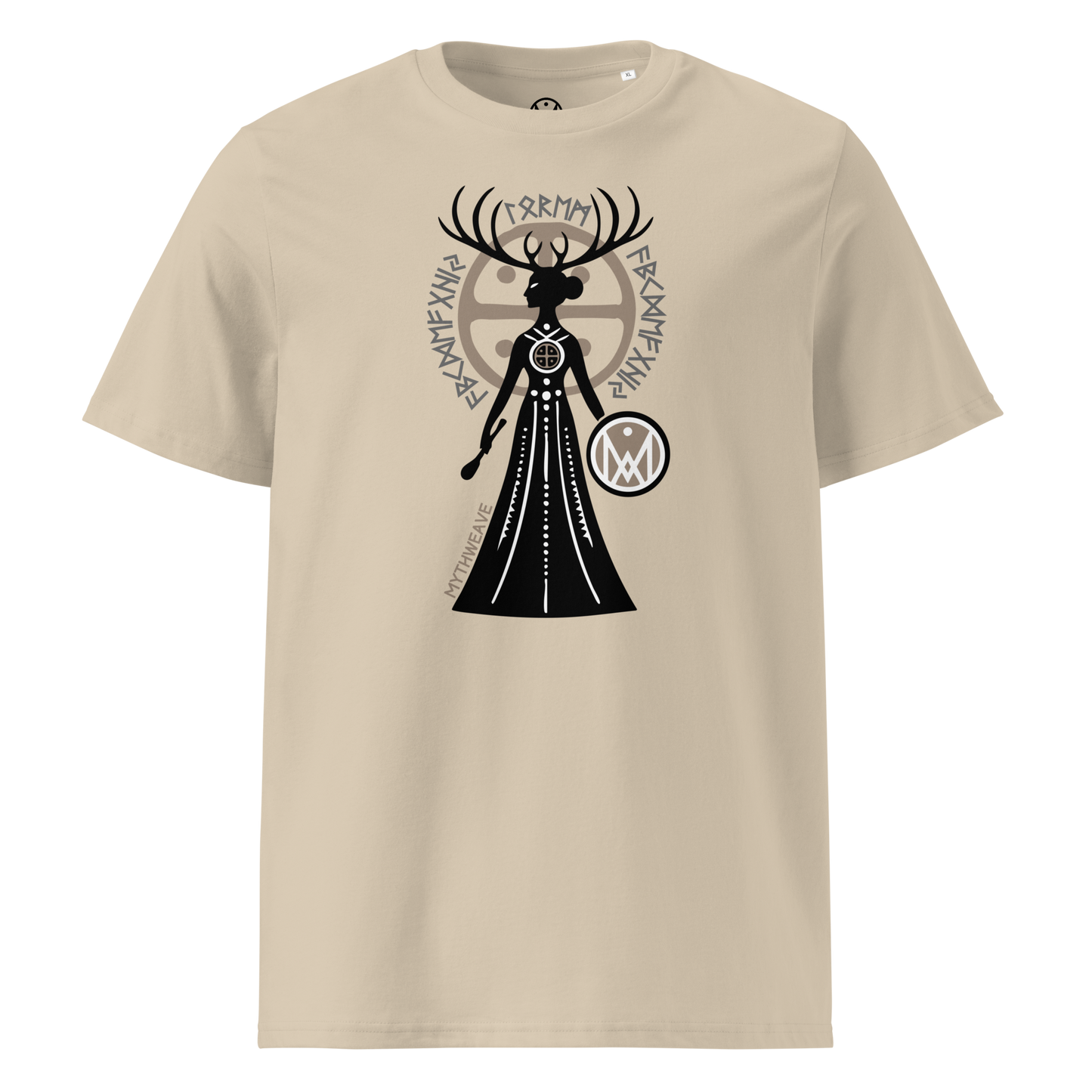
At Mythweave , we do not compromise on our values. Our clothing is made with GOTS certified organic cotton , respecting ethics, beauty and life .