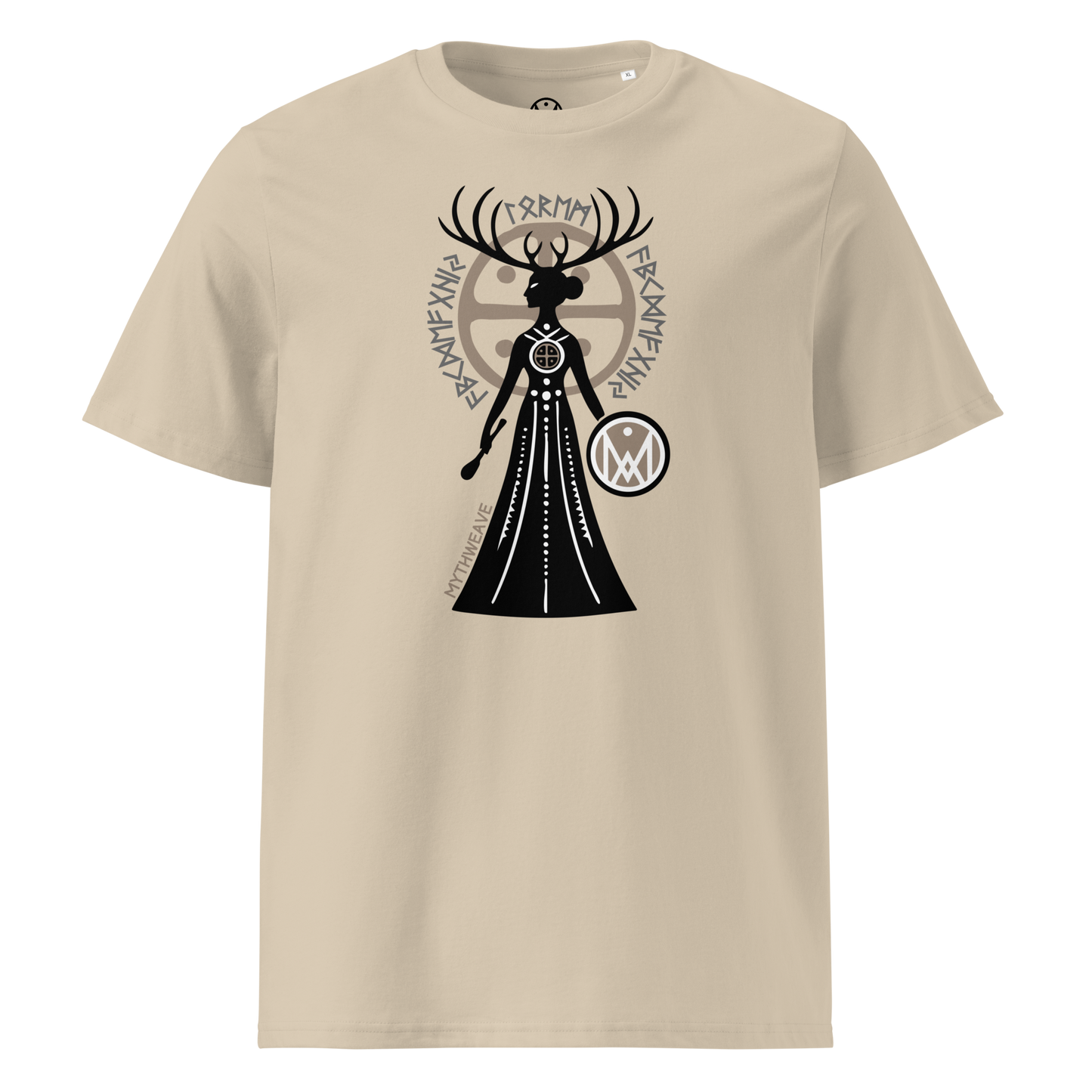
Imbolc , celebrated on February 1st , marks a precise turning point in the solar year , situated halfway between the winter solstice , when the nights are longest, and the spring equinox , the moment of perfect balance between day and night. This period, imbued with mystery and wonder , symbolizes the transition from a dark season to the luminous promise of renewal .
In the cold-swept winter landscapes , the ancient Celts knew how to discern the subtle signs of impending change : the days lengthen slightly , sap begins to rise in the trees, and the first lambs are born in the fields. Imbolc is the prelude to rebirth , a celebration of life beginning to bud beneath the still- frozen surface of the earth.
A festival dedicated to the goddess Brigid
At the heart of Imbolc lies a powerful and inspiring female figure: the goddess Brigid . Patron of fire , poetry , and healing , Brigid is a living embodiment of light and inspiration . She is the flame that illuminates the darkness, the creative breath that nourishes the human soul.
The Imbolc rites honored her by lighting candles or sacred fires . These lights were then perceived as guides through the darkness , both in the physical world and in the inner recesses of the spirit . With the arrival of Christianity , missionaries, unable to diminish her cult, transformed Brigid into " Saint Brigid of Ireland ," a syncretism that testifies to the indelible influence of this mythological figure.
Fire, a universal language
The fires lit at Imbolc , in addition to being a tribute to the goddess Brigid , were a symbol of profound regeneration . In fire , the ancients saw a purifying force, capable of transforming the old into the new, of consuming the darkness to make way for the light .
This symbolism of fire is universal . For Zoroastrians , it represents divine truth and creative energy . In Shintoism , fire purifies sacred places , driving away negative forces . These parallels show that, regardless of culture , lighting a flame is an act that transcends time and borders . By lighting a candle at Imbolc , we reactivate an ancestral practice: that of believing in the power of light to transform the world and humankind .
The womb of the earth, a mirror for the soul
The word " Imbolc " has its roots in Old Irish and means " in the womb ." This expression evokes both the earth ready to sprout and the gestation of human projects . Beneath the snow , invisible seeds patiently await their moment, just as our dreams and ambitions sometimes lie dormant within us, preparing to blossom .
This metaphor resonates with our modern lives. We often tend to rush things, wanting immediate results . Imbolc invites us to respect the time it takes to grow, to cultivate kind patience with ourselves. It's a reminder that every step, even an invisible one , brings us closer to our fulfillment .
The spirituality of cycles
The Celts , through Imbolc , teach us that life is not linear but cyclical . Every ending is a new beginning , every darkness a prelude to light . This wisdom is found in other traditions around the world . Asian cultures honor the Dharma wheel , a representation of karmic cycles . Native American peoples celebrate the medicine wheel , a symbol of life's stages and the balance between all things.
An echo of the current ecological crisis
In a world facing unprecedented climate change , the teachings of Imbolc take on particular importance. This festival, centered on observing nature and its transitions , is a call to live in harmony with our environment .
Imagine if we took the time to observe natural rhythms : detecting the signs of depleted soil , listening to raging rivers , or understanding shrinking forests . Imbolc teaches us that every action , however small, contributes to a vast cycle of interconnectedness . It is an invitation to act with respect and awareness , to reconnect with our place in this vast ecosystem .
Imbolc: a key for today
What if we let Imbolc inspire our modern lives? Lighting a candle in homage to the reborn light , taking a moment to reflect on our own inner transitions , or simply walking in nature to observe its cycles … All of this can be a first step .
Imbolc is not just an ancient celebration ; it is a timeless wisdom . It invites us to slow down , to relearn how to listen to the world , and to be reborn with it. In a frenetic age, this lesson is a true gift .