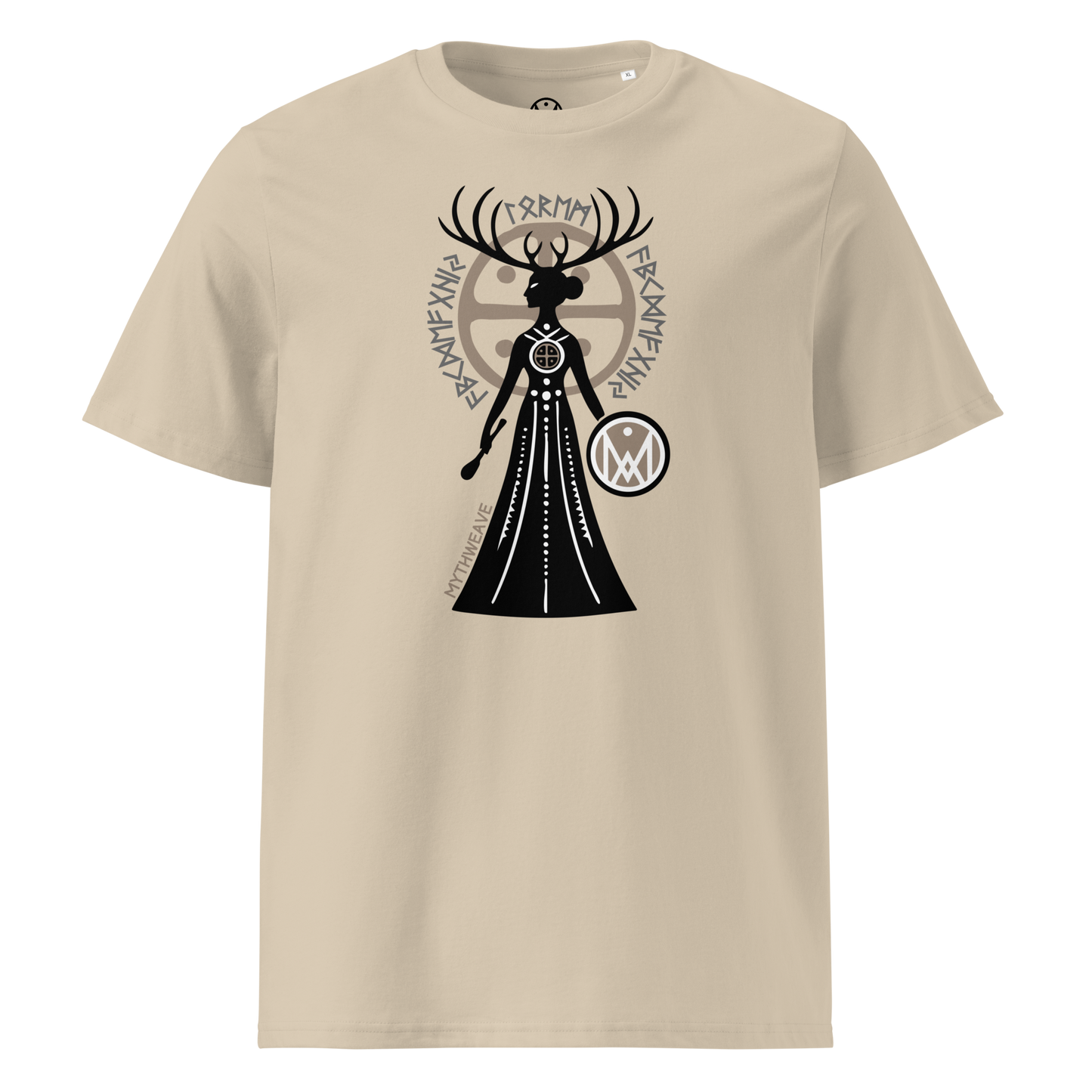
Since the dawn of time, mythological creatures have populated stories, dreams… and clothing. These mysterious figures, sometimes monstrous, sometimes divine, have inspired fashion and transcended art , from medieval painting to contemporary fashion shows.
But do you know how deeply their influence still resonates in our fabrics, patterns, and visual imaginations? Let me take you on a journey through worlds, to meet 7 legendary creatures whose aura continues to permeate the universe of fashion and artistic creation …
1. The Dragon: the sacred fire of the imagination
It's impossible to begin without mentioning the dragon , this ancient creature present in almost every culture around the world. In imperial Asia, it symbolizes celestial power, wisdom, and harmony among the elements. In the West, it is often the enemy to be vanquished, an embodiment of chaos or greed.
Yet it is its visual power that has made it an eternal muse: shimmering scales, sharp claws, membranous wings , spiral tail. These organic and flamboyant forms inspire creators sensitive to the fusion between animality and the divine .
The dragon regularly returns to the forefront of the fashion scene, particularly in oriental prints, Asian-inspired embroidery, or sculptural jewelry that evokes its curves.
2. The Mermaid: between sensuality and mystery
Barely having left the dragon's fire, we plunge into the abyss to encounter the mermaid , this bewitching sea creature with wet hair and a haunting song. Born from Greek myths but revisited by every era, she is the symbol of wild seduction, ambiguity, and metamorphosis .
Fashion has embraced the mermaid through long, form-fitting silhouettes that cling to the body like a second skin. The "mermaid dress" style is its direct legacy. Sequins evoke her scales, iridescent fabrics her aquatic shimmer.
In art, the mermaid is an ambivalent muse: both muse and threat, she questions the norms of gender, identity, and desire. An eternal icon for creators in search of a hybrid and sensual aesthetic .
3. The Phoenix: rebirth and flamboyance
How can we not mention the phoenix , this firebird that dies to be reborn? A symbol of eternal renewal, it also embodies flamboyant beauty, exuberance and transformation .
The phoenix inspires glowing red palettes, luxurious feathers, and plays of textures evoking flames. In the most poetic collections, it becomes an emblem of renewal, resilience, and inner passion .
In contemporary art, it is often a metaphor for suffering transmuted into beauty. A perfect alchemical creature for those who want to shine after the fall.
4. The Sphinx: the enigma incarnate
Half-woman, half-lion, sometimes winged, the Sphinx is one of the oldest and most fascinating figures in the Egyptian and Greek imagination. Guardian of mysteries, it embodies hidden knowledge, intelligence, and the danger of beauty .
In Art Deco and Art Nouveau , the Sphinx is often depicted with elegant lines, symmetrical forms, and a frozen grace. It inspires geometric jewelry, engraved motifs, and mysterious headdresses . In some contemporary creations, it even becomes the symbol of the indomitable woman, of aesthetic sovereignty .
Contemporary fashion , meanwhile, adopts its visual codes in architectural and androgynous creations, between raw strength and ancient refinement.
5. Cerberus: The Inner Beast
Three heads, enormous fangs: Cerberus is the guardian of the Underworld in Greek mythology. And yet… he fascinates as much as he terrifies. In the gothic, punk, or metal worlds , the infernal hound becomes a metaphor for inner rage, for guarding the shadows, for loyalty to chaos.
In alternative fashion , Cerberus inspires studded leather jackets, dark prints, and bestial tattoos. He is an echo of primal instincts, rebellion, and raw energy.
Even in contemporary art, it appears as a totem of tamed fear , of reclaimed animality. Cerberus is no longer simply a monster; it has become an aesthetic emblem of instinctive power .
6. The Kitsune: the mask of metamorphosis
Let's change continents to meet the Kitsune , the shapeshifting fox of Japanese folklore. Often female, this cunning and bewitching creature can transform into a beautiful woman to seduce or deceive.
Kitsune masks are now ubiquitous in Japanese streetwear, festivals, anime visuals, and J-pop music videos. But their influence also extends to Western fashion , in clothing inspired by Japan, pointed hoods, fox motifs, and makeup with sharp, slender lines.
The Kitsune embodies chameleon fashion , the ability to shift from one genre to another, from one style to another, with grace and irony. It is the quintessence of playful and elusive style , poised between femininity and danger.
7. The Gorgon: Fatal Beauty
Finally, it's impossible to conclude this journey without mentioning the Gorgon , and more specifically Medusa , the woman with the petrifying gaze and hair of snakes. Long considered a figure of horror, she has been rehabilitated as a feminist symbol in contemporary art and fashion.
Medusa is now a figure of strength, foresight, and transgression. Her snake coils become hypnotic motifs, her gaze a symbol of lucidity. The Gorgon becomes an icon of feminine power, of revenge against patriarchal myths.
It inspires bold creations , sharp silhouettes, serpentine textures. And in art, it is represented as the revenge of the oppressed , the cry of those who have been silenced.
The invisible thread of myth
Each of these creatures, so different in origin, shares one thing in common: it transcends fear to become beauty . It is this tension between fascination and dread that has fueled artistic creation and the sartorial imagination for centuries.
In an era that is rediscovering symbols, valuing individuality, emotion, and the sacred , legendary creatures are no longer relegated to the margins. They are making their mark in fashion shows, tattoos, illustrations, ethical clothing, and even in our designs , as living archetypes.
And perhaps by wearing them, painting them or invoking them, we become a little bit magicians , a little bit goddesses, a little bit dragons ourselves.